Choose a model
Select a regimen tab, then choose a medication and formulation from the dropdown. PeaK loads the model into that tab so you can review its description, supported inputs and sources.
PSYCHOTROPIC AND RELATED MEDICATION PK/PD VIEWER
PeaK is a browser-based viewer for exploring PK/PD models of psychotropic and related medications. It brings dosing scenarios, supported model inputs, simulated outputs, chart snapshots, overlays and CSV export into a consistent workspace.
Rather than leaving users to interpret model equations in isolation, PeaK makes those models interactive. It helps users visualise how changes in dose, timing, formulation and covariates can alter predicted exposure over time.
The current model library is focused on psychotropic and related medications, with scope to expand as additional published PK/PD models are added. PeaK is designed for education and exploratory review of model-based simulations.
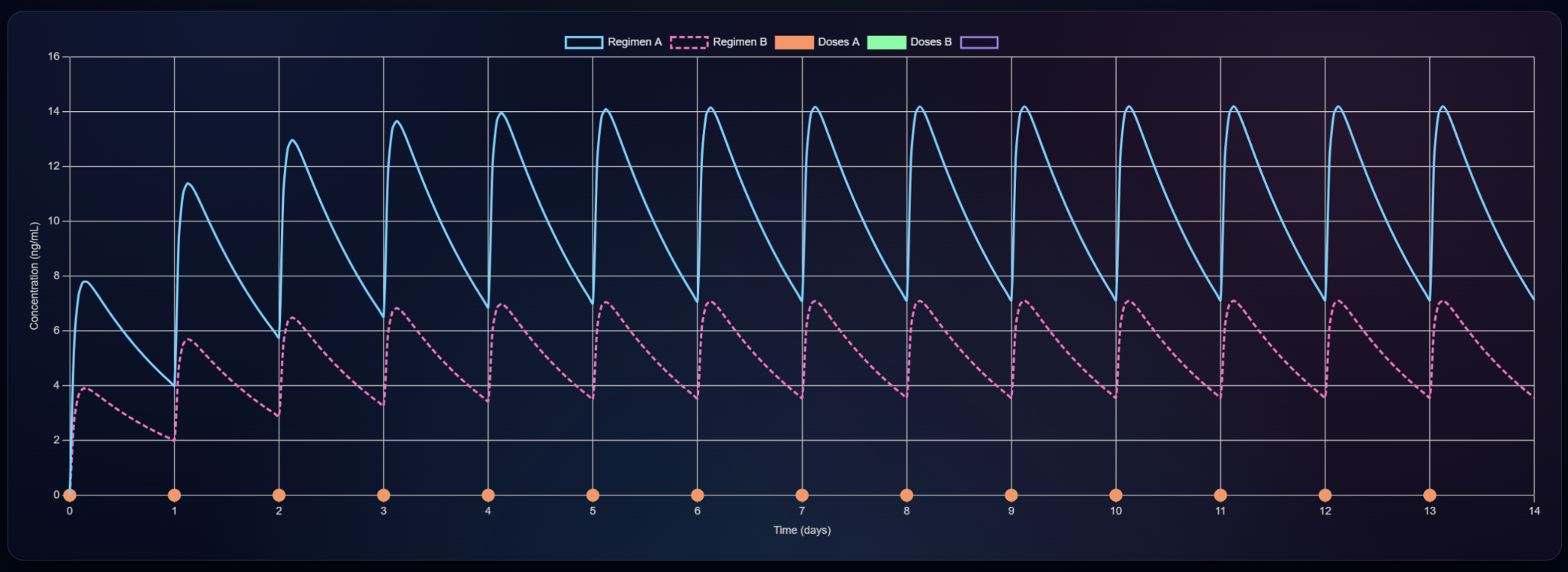
How it works
Select a regimen tab, then choose a medication and formulation from the dropdown. PeaK loads the model into that tab so you can review its description, supported inputs and sources.
Generate a dosing schedule, adjust supported model inputs and edit individual doses.
Examine the chart, compare snapshots, enable compatible overlays or export the currently displayed concentration data.
Explore
PeaK brings model inputs, regimen controls, simulated outputs, chart snapshots, overlays and CSV export into one browser-based workspace.
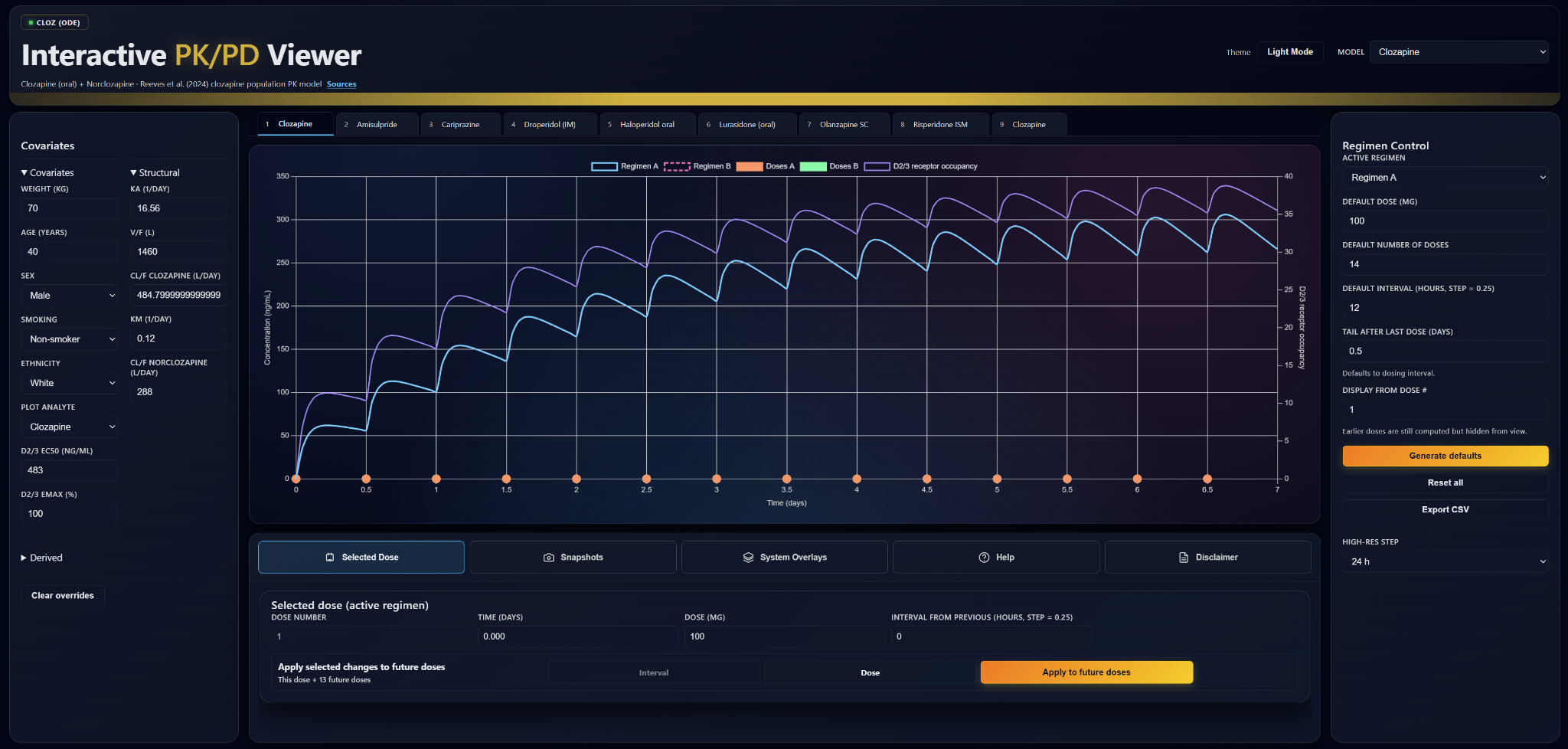
Build and compare dosing scenarios using the selected model.
Adjust supported covariates, dose settings, administration characteristics and formulation-specific options.
View simulated concentration-time curves, compare regimens, and add pharmacodynamic overlays or chart snapshots for models that support them.
Export the currently displayed simulation data from within the workspace.
Click and drag dose markers directly on the chart to adjust timing. Select any dose to fine-tune its time, dose or supported administration settings below, then apply changes to future doses when needed. Hold Shift while dragging to move the selected dose and all later doses together.
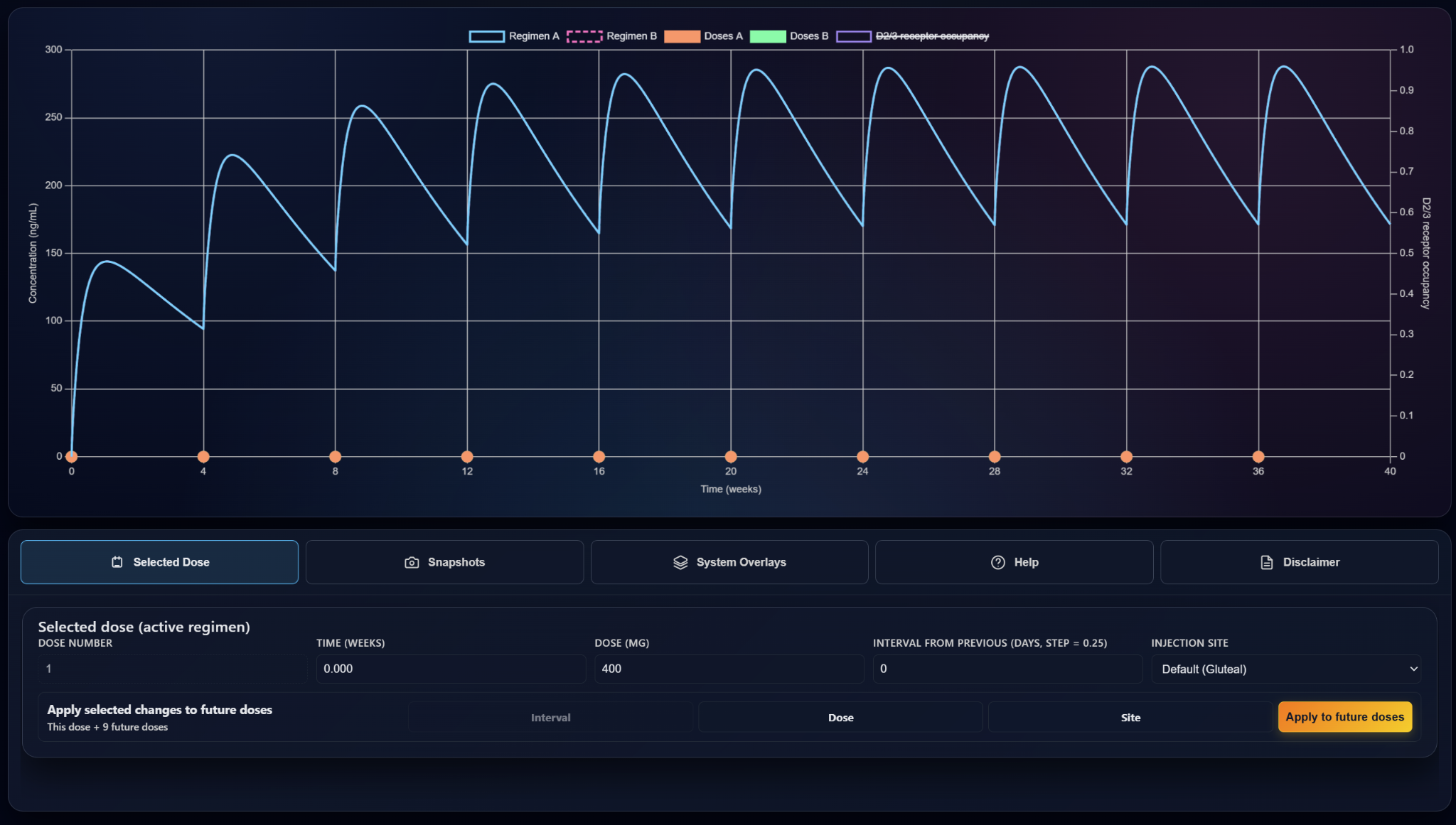
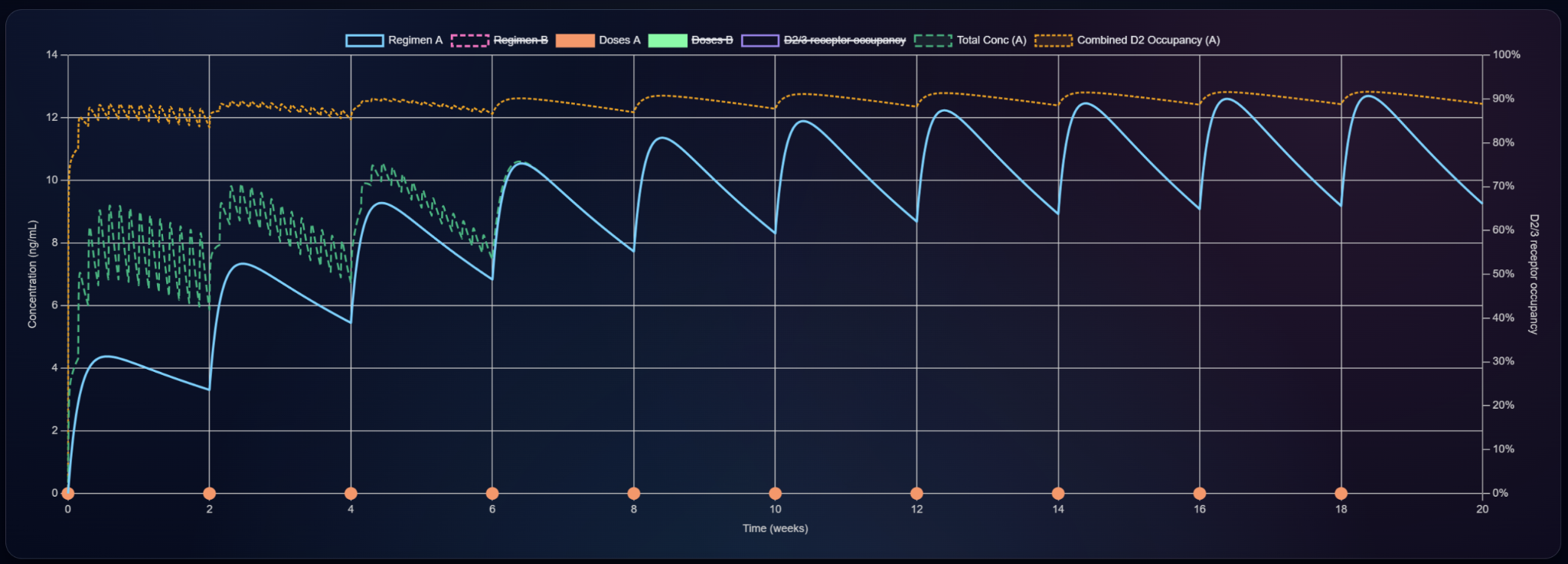
For supported models, PeaK can display estimated receptor occupancy alongside the concentration-time profile. This helps users explore how changes in dose, timing and formulation may alter both predicted exposure and pharmacodynamic effect over time.
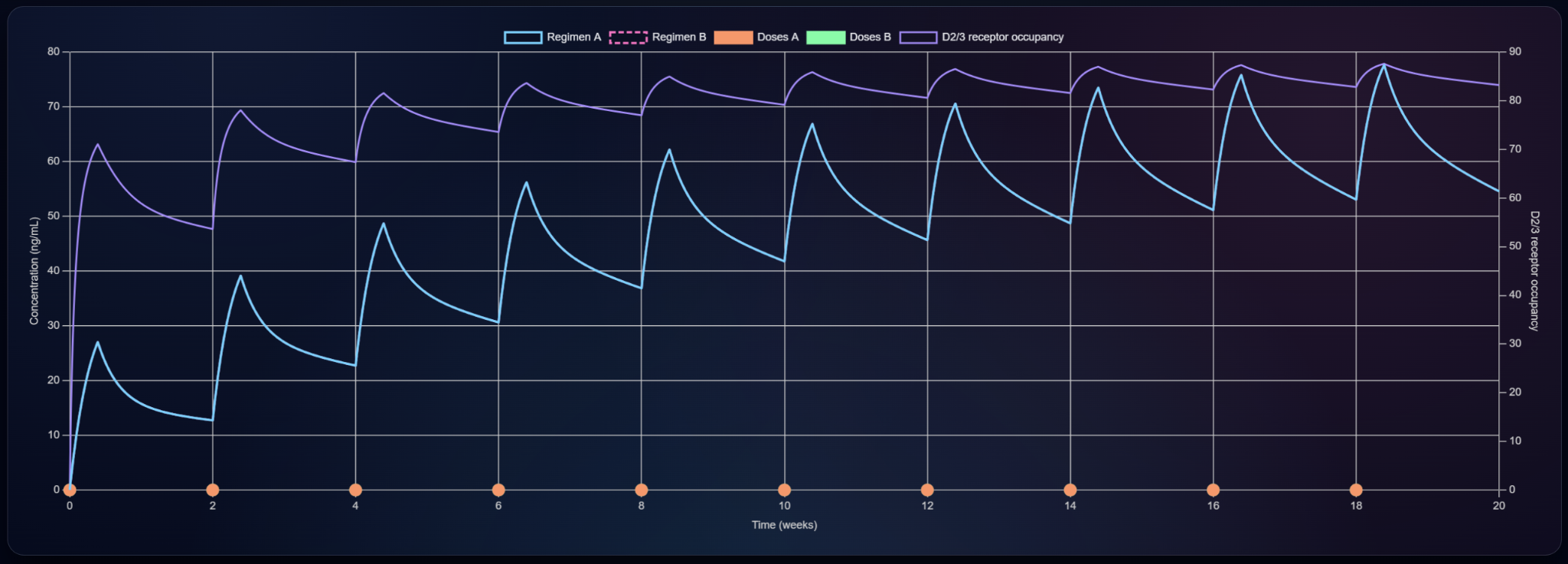
For compatible models, system overlays can combine selected medication slots to show total concentration and combined D2 receptor occupancy.
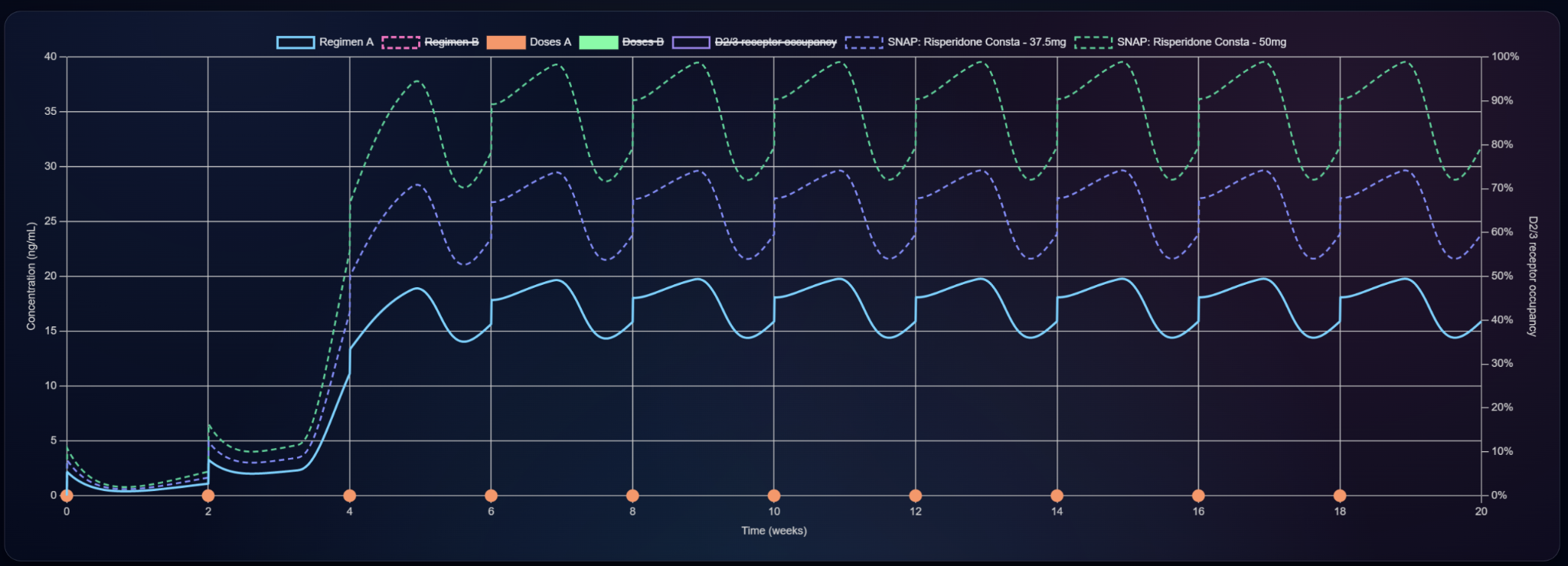
Capture the currently displayed concentration curve as a named snapshot, then apply it to any chart for comparison. Use snapshots to compare differences between formulations, medications and dosing regimens, and see how predicted exposure changes over time.
About
I’m Ben Jull, a clinical pharmacist with a focus on mental health, therapeutic drug monitoring and pharmacokinetic modelling. I built PeaK to make medication PK and PK/PD models easier to explore, compare and understand.
PeaK turns published model equations and source-derived assumptions into hands-on simulations. Users can adjust regimens, covariates and formulations to develop a practical feel for absorption, accumulation, washout, exposure differences and pharmacodynamic response.
The aim is to make the behaviour of different delivery systems easier to understand, from oral dosing and transdermal patches to subcutaneous depots and long-acting injectables, where release kinetics and dose timing can matter as much as the dose itself.
PeaK is an independent educational project.
Feedback
PeaK is under active development. Bug reports, model suggestions and feedback about the viewer or its source material are welcome.
Please send feedback to contact@pkviewer.org.
Open PeaK to compare hypothetical dosing scenarios, adjust supported model inputs and examine simulated PK/PD outputs.